
Industries
Plastics & Petrochemicalpellets, powders and masterbatch.
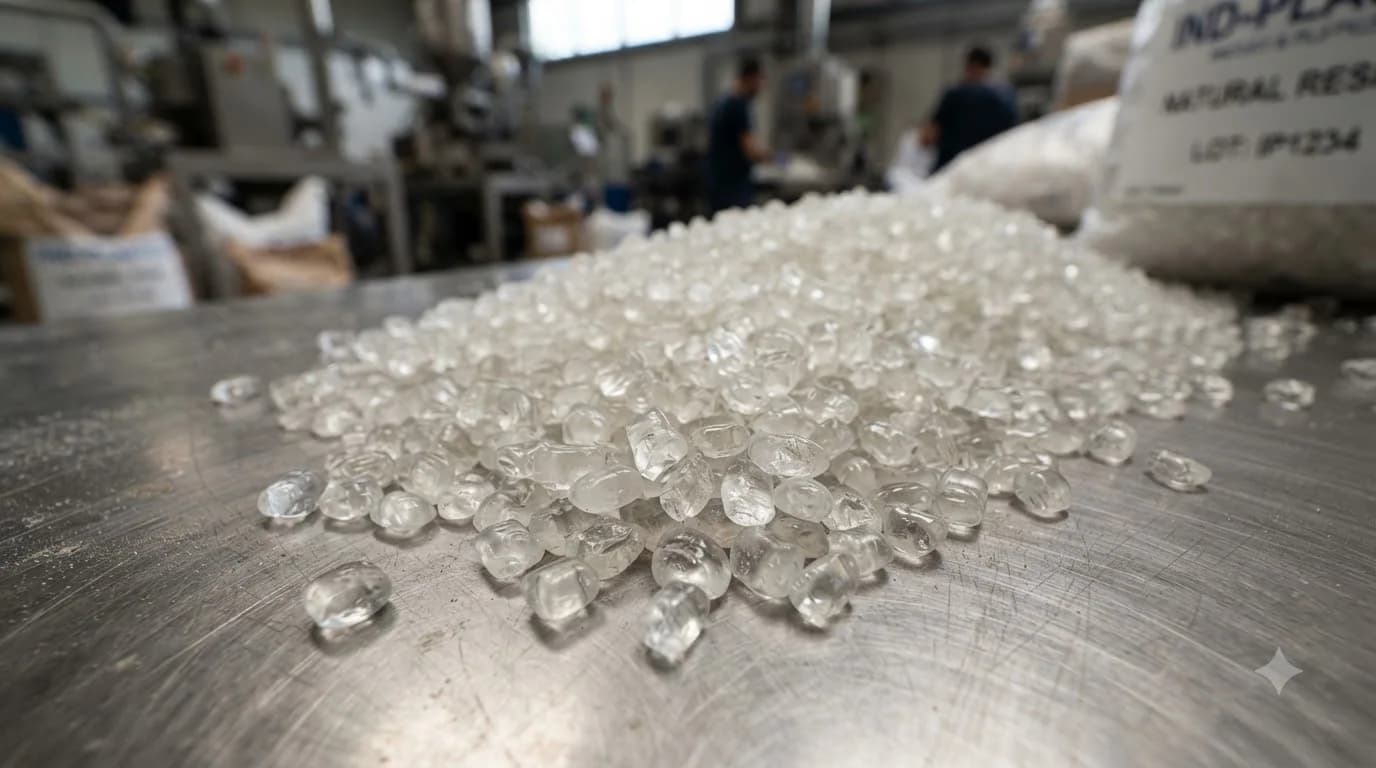
Polymer pellets look like the easiest material in the plant until a line runs too fast and the first streamers of angel hair block a filter.
In short
Plastics and petrochemical material handling covers the intake, silo storage, conveying, dosing and packing of polymer pellets, powders, masterbatch and additives. Design centres on controlling conveying velocity to avoid angel hair and fines, drying hygroscopic resins, accurate additive dosing, and clean transfer into compounding and converting lines.
In detail
How these materials behave.
Angel hair is the defining nuisance of pellet conveying. A pellet sliding along a pipe wall at high velocity heats at the contact point, softens, smears, and draws out into a fine streamer that clings to the wall and grows. The streamers eventually detach, blind filters, block diverters and end up as a visible defect in a moulded or extruded part. The controls are all about the velocity and the surface: keep the conveying velocity down to what the pellet actually needs, use pipe with an interior surface that discourages smearing where the duty warrants it, avoid long straight runs that let pellets accelerate, and use bends designed for pellet duty rather than the ones used for powders.
Fines and dust are the other side of the same coin. Every transfer and every impact chips material off the pellet, and those fines migrate into the hopper, the dryer and the extruder feed, where they melt at a different rate and cause inconsistent plasticising, gels and colour streaks. Dedusting at the point where material enters storage or the machine feed, and designing the route with as few impacts as possible, is more effective than trying to remove fines later.
Hygroscopic polymers add a drying requirement to the handling line. PET, nylon and PC absorb ambient moisture and hydrolyse during melt processing, degrading molecular weight and mechanical properties — so the conveying system has to deliver dried material to the machine without letting it re-absorb moisture on the way. That means dried conveying air, closed transfer from the dryer to the throat, and hopper residence times that account for how quickly the resin picks moisture back up.
Compounding and masterbatch operations shift the emphasis to dosing. A twin-screw line is fed by several streams — base polymer, fillers, pigments, stabilisers, processing aids — and the product is defined by the ratio between them, so feeder accuracy and refill behaviour determine quality. Fillers such as talc or calcium carbonate are also abrasive and poor-flowing, which pulls the design back towards low-velocity conveying, well-designed hoppers with discharge aids, and dust capture at the addition points.
Scope
What PTP supplies to this sector.
Selection
Process requirements.
- Typical materials
- PP, PE, PS, ABS, nylon, PC, PET chips, PVC resin, masterbatch, fillers
- Primary risk
- Angel hair and streamers from high-velocity pellet conveying
- Velocity control
- Sized pickup, pellet-duty bends, no long accelerating straights
- Fines control
- Dedusting at storage intake and machine feed points
- Hygroscopic resins
- Dried air and closed transfer from dryer to machine throat
- Compounding
- Multi-stream feeding of polymer, filler, pigment and additives
FAQ
Frequently asked questions.
What causes angel hair in pneumatic conveying?
Frictional heating. A pellet sliding along the pipe wall at high velocity softens at the contact point, smears, and draws into a fine streamer that sticks to the wall and grows. The streamers later detach and blind filters or appear as defects in the finished part. Lower velocity is the primary control.
How do you keep fines out of the extruder feed?
Reduce fines generation and remove what remains close to the point of use. Fewer impacts and lower velocities in the transfer route generate less; a dedusting step at storage intake or at the machine feed removes the rest before it reaches the throat, where it would melt at a different rate and cause gels or streaks.
Why do PET and nylon need dried conveying air?
Both absorb ambient moisture, and moisture present in the melt causes hydrolysis that lowers molecular weight and mechanical properties. Drying the resin is wasted if humid conveying air or an open transfer lets it re-absorb moisture between the dryer and the machine, so the transfer route has to stay dry and closed.
Where to next
Related pages.
Discuss your powder handling project.
Talk to an engineer.
Send the material, the throughput and the plant constraints. An engineer will come back with a route, not a brochure.