
Components
Industrial metal detectorsfor powder, granule and packed product lines.
Magnets take out the iron. A detector catches the aluminium, the brass and the stainless that walked straight past them.
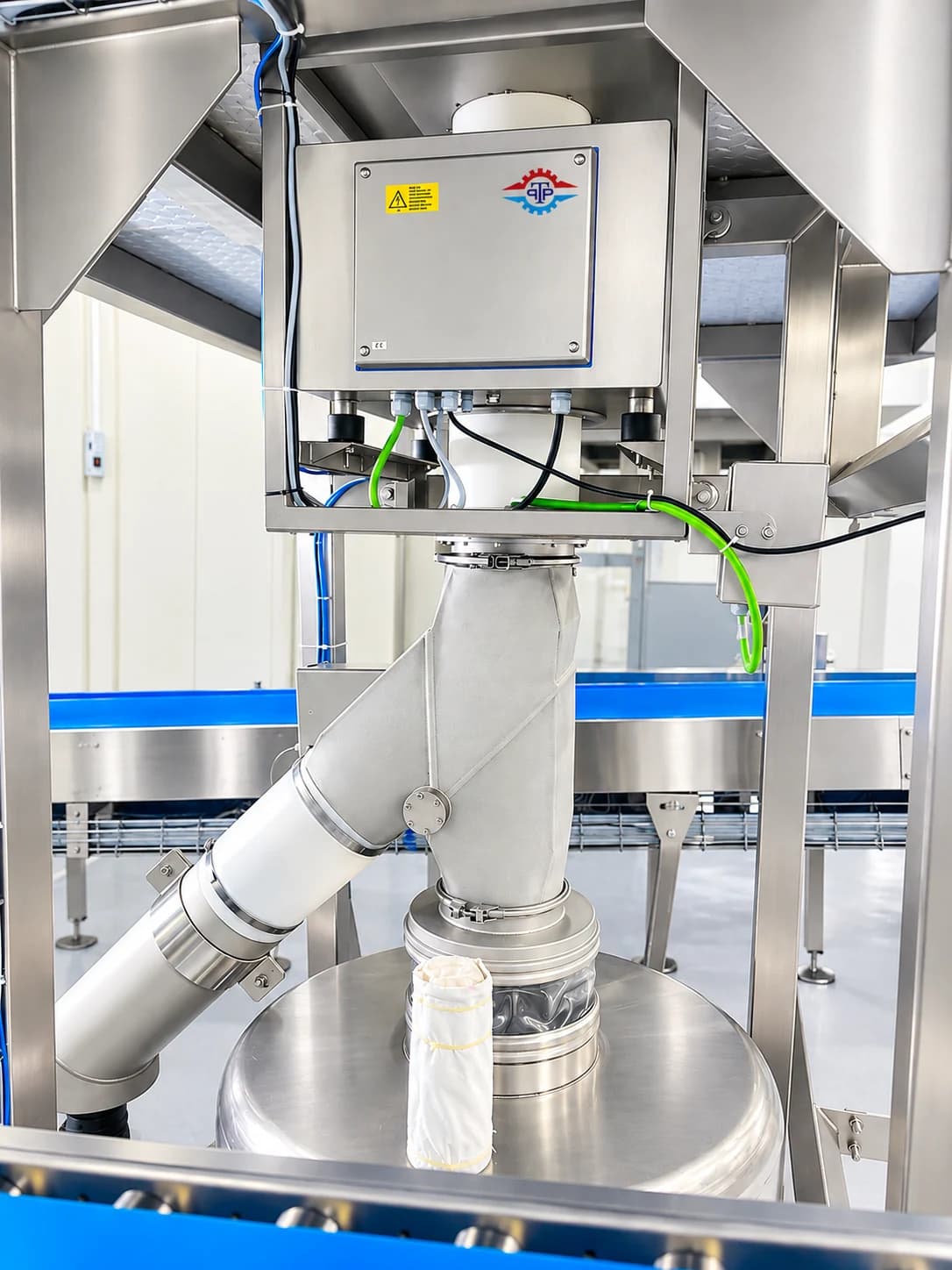
In short
An industrial metal detector finds ferrous, non-ferrous and stainless contamination that a magnet cannot hold, using a balanced coil that senses the disturbance a metal fragment causes as it passes through the aperture. A reject device then diverts the affected material out of the line. Detectors are placed at gravity drops, in conveying lines or over packed product.
In detail
How it works.
A detector is a sensor plus a decision plus an action, and all three have to work or the installation is decorative. The sensor is the search head. The decision is the sensitivity setting, made against the actual product rather than a default. The action is the reject device, which has to remove the affected material fast enough and reliably enough that nothing contaminated continues down the line. Plants that install a head without a proven reject have bought a warning light.
Product effect is the reason a detector cannot be set up from a datasheet. Wet, salty, warm and conductive products produce a signal of their own that the head sees alongside any real contamination. Set the sensitivity high and the line rejects good product all shift. Set it low to stop the false rejects and real fragments pass. Setting up on the product as it actually runs, at the temperature and moisture it actually has, is the whole job.
Aperture size is the other lever, and it is fixed at purchase. Sensitivity depends on how large the fragment is relative to the opening it passes through, so a generously oversized aperture permanently costs detection. Size the head to the line rather than to a future line that might be bigger, and put the detector where the product stream is at its most concentrated.
Placement follows the same logic as a magnet. A gravity fall unit at a chute drop catches powder before it is packed. A pipeline unit sits in the conveying line. A conveyor unit checks packed product, which catches anything introduced by the packing machine itself but has to see through the packaging. Where the site is audited against a food safety scheme, the detector also needs test-piece routines and a record of every detection, which means integrating it into the control system rather than leaving it standalone.
Scope
Types and options.
Selection
How it gets specified.
- Detector position
- Gravity fall at a chute drop, pipeline in a conveying line, conveyor over packed or bulk product — chosen for where contamination can still be removed usefully.
- Aperture
- Sized to the line, not oversized for a hypothetical future duty. Sensitivity depends on fragment size relative to the aperture, so a larger opening costs detection.
- Reject arrangement
- Flap, diverter or pusher reject with a lockable bin and a proving sensor, so the system confirms the affected material actually left the line.
- Product effect
- Wet, salty, warm and conductive products give a signal of their own. Setup is done on the running product, not from a generic setting, or false rejects follow.
- Records and testing
- Test-piece routines and detection logging where the site is audited against a food safety scheme, with the detector wired into the control system.
FAQ
Frequently asked questions.
What does an industrial metal detector detect?
Ferrous, non-ferrous and stainless steel fragments in a product stream. Ferrous is the easiest to find, non-ferrous such as aluminium and brass is next, and non-magnetic stainless is the hardest because its electrical and magnetic properties disturb the coil least. Detection ability for each is quoted separately for exactly that reason.
Where should a metal detector be installed in a powder line?
As close to the end of the process as the mechanics allow, because anything installed earlier cannot see contamination introduced afterwards. A gravity fall unit just before packing is the usual answer for powders. If the packing machine itself is a plausible source, a conveyor unit over the finished pack covers that too.
Why does a detector reject good product?
Almost always product effect. Moisture, salt, temperature and density variation in the product generate a signal the head cannot distinguish from a small fragment. The remedy is proper setup on the running product, and stable process conditions — a line whose moisture or temperature swings will drift out of a setting that was correct when it was made.
Where to next
Related pages.
Discuss your powder handling project.
Talk to an engineer.
Send the material, the throughput and the plant constraints. An engineer will come back with a route, not a brochure.