
Components
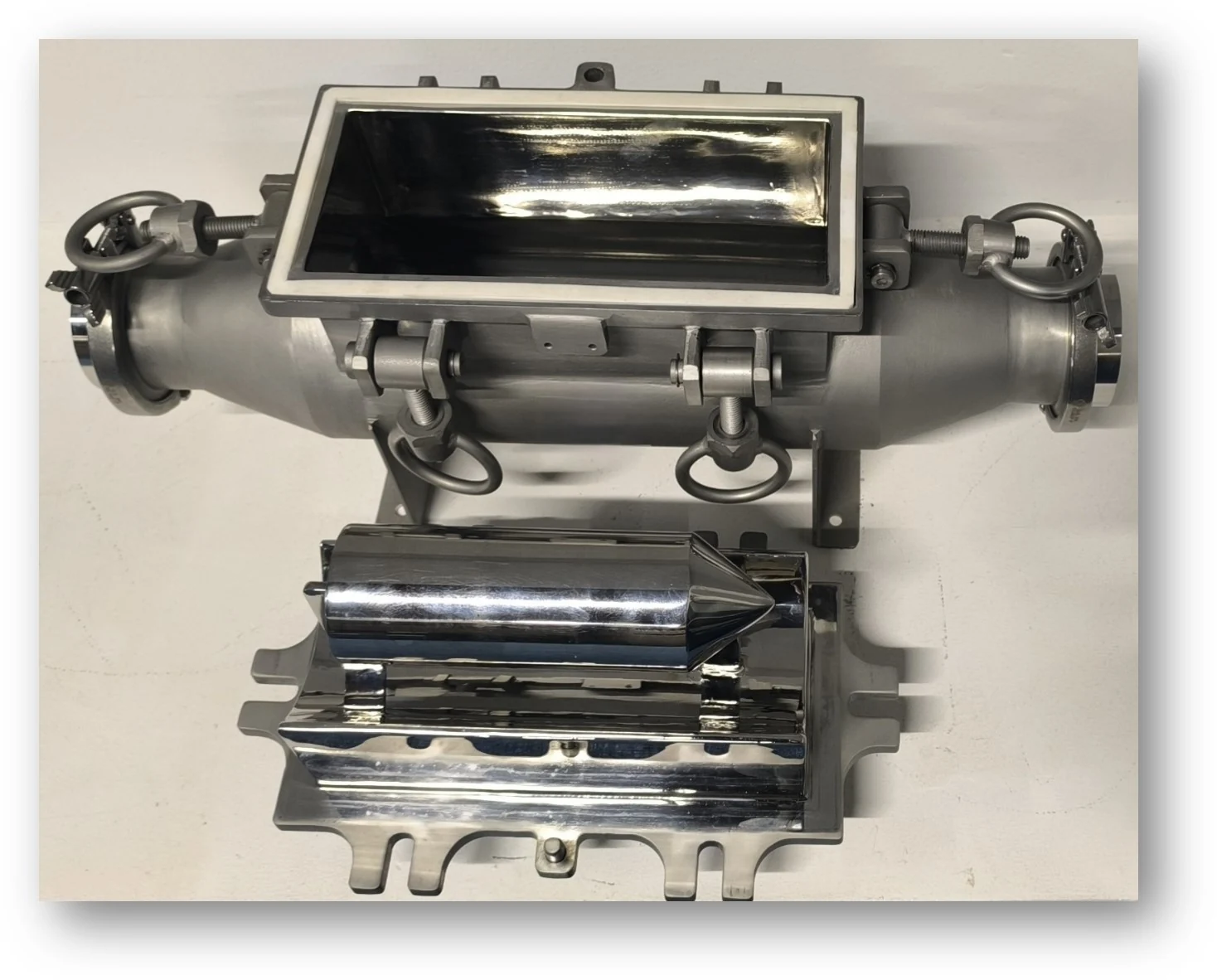
Magnetic separatorsgrate, drawer and pipeline magnets for product protection.
Tramp iron gets into every powder line — from delivery, from wear, from the last repair. A magnet is the cheapest place to take it out.
In short
A magnetic separator removes ferrous contamination from a powder or granule stream using permanent magnets placed in the product path. Grate magnets sit in a hopper throat, drawer units stack rows of tubes in a housing, and pipeline magnets fit inline. Captured tramp iron protects downstream mills, sifters and the finished product.
In detail
How it works.
Ferrous contamination arrives from more places than most audits assume. It comes in with the raw material, off a worn screw flight, off a mill hammer, off a bolt that was dropped during a shutdown and never found. None of that is unusual and none of it means the plant is badly run. What matters is whether there is something in the product path that takes the iron out before it reaches a mill, a sifter screen or a pack.
Placement decides how much a magnet is worth. A magnet after the packer catches nothing useful. A magnet immediately before a mill or a sifter protects a piece of equipment that is expensive to repair and slow to restart. A magnet at intake catches what came in with the delivery, which is the population most likely to be large. Most lines end up with two — one at intake and one immediately ahead of the critical machine.
The type follows the geometry of the line. A grate magnet drops into a hopper throat and suits a gravity fed, free-flowing product. A drawer unit stacks two or more rows of tubes so nothing has a straight path through, which is what a fine or lightly cohesive powder needs. A pipeline magnet fits into a conveying line where there is no convenient gravity drop. A plate magnet sits over a chute or a belt where the burden is deep and coarse.
Cleaning frequency is the part that gets underestimated. A magnet that has to be wiped by hand and holds a heavy load will be skipped on a busy shift, and a loaded magnet stops separating. Where the line runs continuously, easy-clean cartridges or self-cleaning units are worth the extra cost simply because they will actually get done. PTP supplies magnets individually, including into lines PTP did not build, where the retrofit is often just a spool piece and a housing.
Scope
Types and options.
Selection
How it gets specified.
- Separator type
- Grate magnets in a hopper throat, drawer units for a fully swept powder stream, pipeline magnets inline, plate magnets over chutes and belts.
- Magnet material
- Rare earth assemblies for fine and weakly magnetic particles; ferrite where the target is coarse tramp iron or the product temperature is high.
- Cleaning method
- Manual wipe-clean, easy-clean cartridges, or self-cleaning units where the line runs continuously and the magnet loads faster than the shift allows.
- Placement in the line
- At intake to catch what arrived with the delivery, and immediately ahead of mills, sifters and packing so tramp iron never reaches the machine or the pack.
- Hygiene
- Sanitary internal finish, crevice-free welds and clamp connections where the line is food, dairy or pharma and the housing is opened for cleaning.
FAQ
Frequently asked questions.
How does a magnetic separator work in a powder line?
Permanent magnet tubes or plates sit directly in the product path. As powder flows past, ferrous particles are attracted to the magnet surface and held there while the product carries on. The magnet is periodically cleaned by hand or by a self-cleaning mechanism. Nothing is powered and nothing is consumed, which is why magnets are usually the first line of defence.
Do I still need a metal detector if I have magnets?
Usually yes. A magnet holds ferrous material well and some weakly magnetic stainless poorly, and it holds nothing at all that is non-ferrous. A detector finds aluminium, brass and most stainless grades that a magnet will pass. The two are complementary: magnets remove the bulk of the contamination, the detector catches what got through.
Where should a magnet be installed?
Immediately upstream of whatever you are protecting. Ahead of a mill or a sifter if the concern is equipment damage. At intake if the concern is what arrives with raw material. Just before packing if the concern is the finished product. A magnet placed downstream of the risk it is meant to cover is doing nothing useful.
Where to next
Related pages.
Discuss your powder handling project.
Talk to an engineer.
Send the material, the throughput and the plant constraints. An engineer will come back with a route, not a brochure.