
Controls
Industrial automation
PLC, HMI and control panel systems.
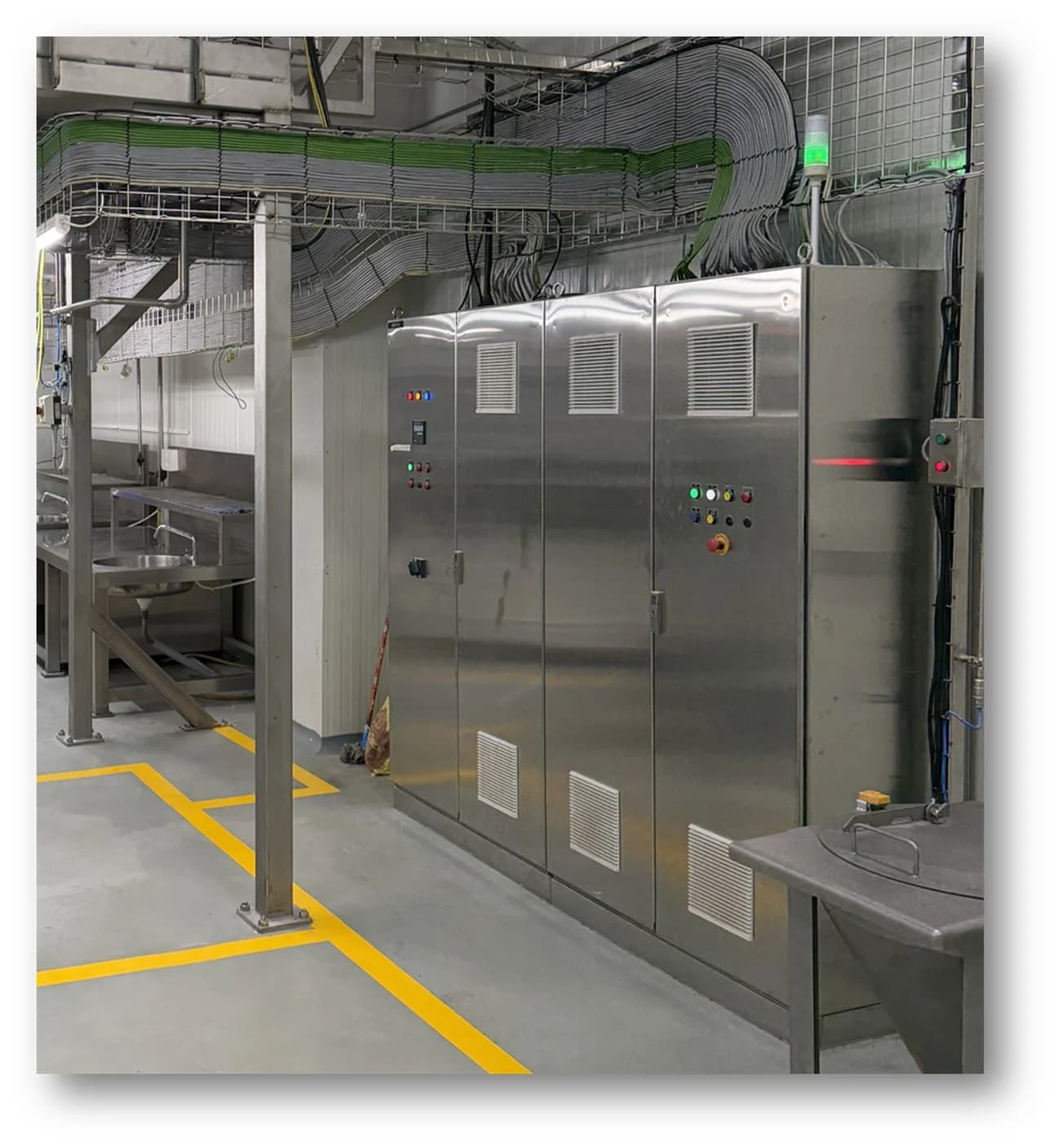
PTP builds the control system as part of the plant rather than as a layer added over it. Industrial control systems that sequence the equipment PTP designed, with the interlocks and recipe handling the process actually needs.
In short
Industrial automation is the use of control systems — PLCs, HMIs, instruments and drives — to run plant equipment with limited manual intervention. In a process plant it sequences conveying, batching, mixing and packing, holds recipes, records batches, interlocks equipment for safety and reports what the line actually did.
In detail
How it works.
Automation on a powder line is mostly sequencing. A convey cycle must start only when the receiving vessel has room, the airlock has to run before the blower loads, the diverter has to prove position before material moves, and the mixer must not discharge into a hopper that is already full. Those interlocks are what keep a line running unattended.
Recipe and batch control sits above the sequencing. Formulations are held in the system, ingredients are weighed in order, minor additions are dosed and confirmed, mixing time is enforced, and the batch record shows what went in and when. For food, dairy and pharma plants that record is as much a deliverable as the blend.
Instrumentation decides what the control system can actually see. Level probes and load cells, filter differential pressure, blower discharge pressure, valve position feedback, motor current and temperature — each one is either an early warning of a developing problem or a blind spot. PTP specifies these against the failure modes of the equipment, not to fill a panel.
Variable frequency drives do more than save power. Ramping a blower or a screw changes how the material behaves at start and stop, softens surge into a receiving vessel, and lets one machine run different products at different rates without mechanical change.
Because PTP engineers the mechanical system too, the control philosophy is written against real equipment: the actual conveying cycle time, the real discharge behaviour of the silo, the specific dust collector cleaning regime. Remote access then allows diagnostics and support without a site visit for every alarm.
Scope
What we engineer and supply.
Selection
How the system gets specified.
- Scope
- Control philosophy, panel design and build, PLC and HMI software, instrumentation, wiring supervision, commissioning and operator training.
- Batch control
- Recipe storage, sequenced ingredient weighing, minor-ingredient dosing, enforced mixing time and batch records.
- Integration
- Written against the equipment PTP designs, so cycle times, interlocks and alarms reflect the actual plant rather than a generic template.
- Instrumentation
- Level probes and radar, load cells, filter differential pressure, valve position feedback, motor current and temperature monitoring.
- Drives
- Variable frequency drives for blowers, screws and feeders, with ramping to control surge and material behaviour at start and stop.
- Support
- Remote access for diagnostics and software support, alongside spares and annual maintenance cover.
FAQ
Frequently asked questions.
What does industrial automation cover in a process plant?
The control system that runs the plant: PLC and HMI, motor control panels, instrumentation, drives, safety interlocks, recipe and batch control, and the reporting that shows what the line produced. It is factory-floor control of physical equipment, not enterprise software.
Can automation be retrofitted to existing equipment?
Usually yes. The common route is to add instrumentation where the plant is currently blind, replace or extend the control panel, and rewrite the sequencing around the existing machines. Retrofits are a normal part of PTP's work alongside new lines.
Why is batch recording important?
Because in food, dairy and pharma plants the record of what went into a batch, in what order and for how long, is part of the product. Automated weighing and sequencing produce that record as a by-product of running the line rather than as separate paperwork.
Does PTP support control systems remotely?
Yes. Remote access allows diagnostics, software support and much routine troubleshooting without waiting for a site visit, which shortens downtime on faults that turn out to be sequence or instrument issues.
Discuss your powder handling project.
Talk to an engineer.
Send the material, the throughput and the plant constraints. An engineer will come back with a route, not a brochure.