
Services
Process plant spares, retrofits and supportmaintenance contracts and remote diagnosis.
Maintenance is what keeps a line running, and it is the first thing dropped when the plant is busy. The deficit does not disappear — it turns into an emergency repair later.
In short
Spares and support for process plant covers the wear parts that keep a line running — filters, blower and vacuum pump parts, bearings, gaskets and seals, vibratory motors and air fluidisers — together with an annual maintenance contract, planned inspections and remote access for fault diagnosis without a site visit.
In detail
What the service covers.
The pattern is consistent across plants. A small problem appears and is worked around because the line is busy. Another appears. Neither is urgent on its own, and neither gets a shutdown slot. Over a year those workarounds accumulate into a maintenance deficit, and the deficit is eventually paid all at once — as an emergency repair, an unplanned shutdown, or a safety issue. Nothing in that sequence requires anyone to be negligent. It only requires maintenance to be the thing that always gets deferred.
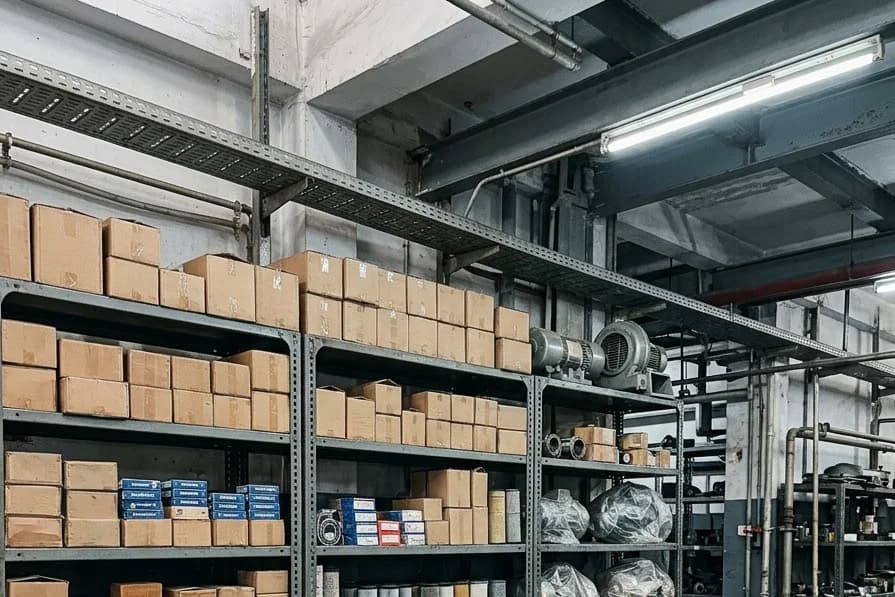
PTP supplies spare parts for process equipment on their own account, not only for equipment PTP installed. Filters, blower and vacuum pump parts, bearings, gaskets and sealing for various process machineries, vibratory motors and air fluidisers cover most of what actually wears on a powder line. For valve work the wear items are usually rotors, tip strips and shaft seals on rotary valves, and seals, actuators and position switches on diverters and isolation valves. Where a part is no longer made, a functional equivalent is identified rather than the plant being told to replace the whole machine.
The Annual Maintenance Contract puts the work on a calendar so it stops competing with production for attention. PTP's automation team runs a system care contract covering the health of PTP-supplied panels, the plant control system, and field instruments — level sensors, limit switches, pressure transmitters, load cells, indicators and other safety devices — with basic training for plant operators and electricians included. The contract combines a set number of engineer visits across the year with online support hours available when something goes wrong between them.
Remote support changes the economics of a fault. A large share of control system problems are diagnosable without anyone travelling: a sensor reading out of range, a sequence stalled waiting on an interlock, a parameter changed and not recorded. PTP Remote Support provides remote access for support and maintenance work, and can be extended to give the customer's own staff remote access to the same system. What used to be a next-day site visit becomes a call, and the line often restarts the same hour.
Retrofits sit alongside this. Adding a magnet ahead of a mill, fitting a metal detector before packing, putting in a diverter so a destination can be changed from the panel, adding a dust take-off at a transfer point — these are small, contained jobs on a line that already exists, and they are the most common way PTP works on plant it did not originally build.
Scope
Scope of work.
Selection
How we work.
- Parts supply
- Supplied for process equipment generally, not only for lines PTP installed. Where an original part is obsolete, a functional equivalent is identified.
- Maintenance basis
- Preventive and predictive work on a scheduled contract, rather than reactive callouts, so the work stops competing with production for a slot.
- AMC content
- Panel and control system health checks, field instrument verification, and operator and electrician training, with engineer visits spread across the year.
- Remote support
- Remote access for diagnosis and support work, with the option to extend the same access to the customer's own maintenance staff.
- Retrofit work
- Contained additions to a running line — product protection, routing or dust control — sized to fit an existing shutdown window rather than needing a new one.
FAQ
Frequently asked questions.
What does an Annual Maintenance Contract cover?
Scheduled attention to the parts of the plant that fail quietly: PTP-supplied panel health, the plant control system, and field instruments including level sensors, limit switches, pressure transmitters, load cells, indicators and safety devices. Basic training for operators and electricians is included, along with engineer visits through the year and online support hours between them.
Can PTP supply spares for equipment it did not install?
Yes. Spare parts supply for process equipment is a service in its own right — filters, blower and vacuum pump parts, bearings, gaskets and seals, vibratory motors and air fluidisers. Send the machine, the part and ideally a photograph of the nameplate. Where the original is obsolete, a functional equivalent is proposed rather than a whole-machine replacement.
What can actually be fixed by remote support?
More than most plants expect. Sensor readings out of range, a sequence stalled on an interlock, a parameter changed and not recorded, alarm history that explains a trip — all of it is visible remotely. It does not replace a mechanical repair, but it usually tells you whether you need one, which is the difference between a call and a lost day waiting for a visit.
Where to next
Related pages.
Discuss your powder handling project.
Talk to an engineer.
Send the material, the throughput and the plant constraints. An engineer will come back with a route, not a brochure.